On the Roots of Japan's Political Problems
In this article, I intend to discuss some scattered thoughts on the roots of Japan’s political problems, seeking neither comprehensiveness nor accuracy, but insight. I will argue that the root of Japan’s political problems lies in Shinto politics with the Emperor at its core, and that the only path to normalizing and demilitarizing Japan (removing militarism) is to abolish the Emperor system and reject Shinto politics.
The “Yasukuni Shrine”
Japan’s Yasukuni Shrine is a place of Shinto worship. On the surface, it somewhat resembles our martyrs’ cemetery. This is why some people secretly understand Japanese politicians’ visits to Yasukuni Shrine. They understand that Japanese people generally believe preventing them from worshipping at the shrine is unacceptable - an arbitrary interference with their cultural and religious activities. This is somewhat like other countries preventing us from worshipping our ancestors, which would be absolutely unacceptable.
Why do China and Korea react so strongly to Japanese political figures visiting Yasukuni Shrine? This is not general opposition to Japanese culture and religion. Yasukuni Shrine enshrines approximately 2.466 million spirits, over 80% of whom perished during World War II, including many participants in aggressive wars. Particularly, it enshrines 14 Class-A war criminals and approximately 1000-2000 Class-B and Class-C war criminals from World War II.
Japanese people consider these figures as martyrs who sacrificed themselves for their country. The problem lies in the fact that these so-called “martyrs” sacrificed themselves by invading other countries, not for national unification or resisting foreign enemies. Imagine if Chinese people generationally worshipped villains who even themselves acknowledged as utterly evil - what kind of situation would this be?
This is a fundamental issue of right and wrong. Fundamental issues of right and wrong permit no ambiguity or contradiction. If the Japanese appreciate and cherish these “martyrs,” they could simply deny they did anything wrong, and our criticism would focus on their denial of aggression. However, the problem lies in their consistent ambiguity and self-contradiction. Does a modern civilized nation have a universally clear understanding and attitude on whether “invading other countries is just”? Being upside-down on right and wrong regarding aggression, or being self-contradictory, is absolutely unacceptable. This is the root of its political and cultural distortion, determining the nation’s fundamental character and direction.
Japan has demonstrated ambiguity or even denial at different levels on whether to admit defeat, acknowledge aggression, and acknowledge the injustice of war. This stands in stark contrast to Germany. When defeated, acknowledge it; when wrong, admit it; otherwise firmly deny and continue fighting. On one hand not denying having invaded and failed, while on the other hand enshrining invaders, being extremely ambiguous on whether “aggression is unjust.” This not only makes neighboring countries uneasy but also harms the country itself, because this plants the seeds of “distrust” and “unwillingness to accept.”
Therefore, maintaining clear and firm positions on major issues of right and wrong - regarding defeat, aggression, and the injustice of war - is not merely a matter of dignity, but of national character. It is a fundamental issue that will determine a nation’s basic direction.
Control Rather Than Neutralization
The examples of Germany after World War I and World War II demonstrate that for defeated nations, one cannot merely defeat them - they must be transformed and rendered harmless. The victors allowing defeated nations to continue enshrining invaders is baffling, because this also places the victors themselves in an ambiguous position. So what is the reason behind this seemingly baffling surface?
The reason is that America’s basic strategy toward Japan is control rather than neutralization. What should have been a replication of the German solution for Japan, due to changes in the international situation, became a situation of America solely controlling Japan. America’s control of Japan ensures on one hand that Japan will not resist America, but on the other hand cannot truly transform Japan and eliminate the roots of external aggression and expansion. Once control is lost in the future, America can withdraw, while Japan’s harm to its neighbors is assured.
It is said that before occupying Japan, America considered whether to hold the Emperor accountable for war responsibility, whether to abolish the Japanese Emperor system, to transform Japan into a completely secular liberal democratic country. But they received reports stating that the Emperor is not only Japan’s head of state, but more importantly the core of Japanese Shinto belief, a symbol of Japanese national culture. Removing the Emperor might cause the entire nation to instantly lose cohesion, making it difficult for America to control. Additionally, the Soviet Union might take advantage of this to support the Japanese Communist Party. After comprehensive consideration, America decided to preserve the Emperor system. After all, America’s basic strategy was not to transform Japan, to normalize and neutralize it, but to maintain control, even intentionally or negligently preserving its genes for external aggression. A neutralized Japan does not serve America’s fundamental interests. Because, clever as Americans are, they know they cannot control Japan forever.
A Nation Without Sovereignty
Japan is a typical nation without sovereignty. Of course, in today’s world there are few truly sovereign nations (this is unrelated to debates about whether sovereignty is good or necessary, whether it has value). Like South Korea, Japan is the frontier and vassal of an empire. Just understanding the Tokyo District Public Prosecutors Office’s Special Investigation Department and the US-Japan Joint Committee gives a glimpse of this.
The Tokyo District Public Prosecutors Office’s Special Investigation Department is a supra-sovereign institution established by Americans. I saw an introduction to this institution on our Supreme People’s Procuratorate’s website, emphasizing it as “the sharp weapon of the Japanese prosecutorial system against corruption,” “similar to Hong Kong’s Independent Commission Against Corruption in China.” This seems to suggest we can have similar institutions, seems to consider this merely an anti-corruption issue. Every nation has corruption problems; power inevitably leads some members of the ruling group toward corruption. But a sovereign society cannot have something like an “Independent Commission Against Corruption,” just as it cannot have something like the Tokyo District Public Prosecutors Office’s Special Investigation Department, because they are all supra-sovereign institutions, precisely the manifestation of this society’s lack of sovereignty.
If a society has sovereignty, when corruption occurs within the ruling group, it fundamentally relies on self-discipline. Those who make and enforce laws are members of their own group. In such a society, anti-corruption institutions cannot be supra-sovereign institutions. What is a sovereign? A person in a society whom others habitually obey but who does not habitually obey any other person. In a society with sovereignty, anti-corruption institutions are internal structures of the sovereign, not transcendent institutions. This makes their operations give the sovereign basic decency and restraint, whether the sovereign’s own rule is good or bad by certain standards. Much corruption is routinely let go institutionally - this is the understanding among sovereigns: leave room for others, you may meet again, who knows when it will be your turn.
This is shown even more clearly in South Korea. South Korea is also a nation without sovereignty. South Korea’s prosecutor’s office is also a peculiar institution from the perspective of modern constitutional theory, partially playing a supra-sovereign role. Almost every president after leaving office faces investigation by the prosecutor’s office, many even convicted, some even forced to suicide, yet the crimes investigated were not major crimes.
If viewed merely from the rule of law perspective, one can ask: do these presidents have or possibly have problems? Yes. Then is there any problem with them facing legal review and sanctions? No. This is a victory for the rule of law. The law indeed firmly locks power in a cage. However, has anyone considered who puts power in the cage in a society? “Laws cannot enforce themselves.” Fundamentally, it is the sovereign themselves. So if the sovereign locks themselves in, closes the door, locks it, and throws away the key, if this is possible, ultimately is it because of the sovereign’s law or the sovereign’s morality? The jurist Austin, over two hundred years ago, frankly stated that constitutions are not law but social morality, the sovereign’s promise to society, because if law is the sovereign’s command, then commanding oneself equals freedom.
From a rule of law perspective, I may appreciate South Korea’s practice, but from a political perspective, this only shows that (1) South Korean presidents do not belong to the sovereign or true ruling group, (2) South Korea is not a sovereign nation, (3) South Korea’s prosecutor’s office is a supra-sovereign institution, and (4) South Korea’s true sovereign lies elsewhere.
A supra-sovereign institution is actually the link between domestic and external true sovereigns. South Korea’s Supreme Prosecutor’s Office and Japan’s Tokyo District Public Prosecutors Office’s Special Investigation Department are both such institutions.
Former Japanese Prime Minister Yukio Hatoyama’s governing slogan was “taking politics back from bureaucrats” (官僚から政治主導へ, “Kanryō kara Seiji Shudō e”). Because he and all other politicians know that the Japanese government’s true decision-makers are not the transient politicians who rise to power through votes, but the iron-clad technocrats. Later, Hatoyama could not defeat the powerful bureaucratic group and could only leave in disappointment. It is worth mentioning that Hatoyama only noticed the existence of the US-Japan Joint Committee after becoming Prime Minister. He discovered that many major policies were ultimately decided by this institution, with the Prime Minister like a puppet.
There are many other indications that Japan is not a sovereign nation, such as being occupied by foreign troops, having a constitution written by foreigners, the Plaza Accord, America issuing debt to Japan to use Japanese money to buy Japanese company shares, the Trump regime using tariff blackmail to force Japan to invest 300 billion dollars in America, etc. Of course, I will not elaborate on these details. I have no intention of discussing the details of contemporary Japanese political operations.
A Vassal of a Civilization
If viewed from international politics perspective, Japan is a nation without sovereignty. In ancient concepts, Japan is America’s semi-colony.
What is interesting is viewing Japan’s current state from a civilizational perspective. Japan is an East Asian country in geographical terms, a country in the Chinese cultural sphere in cultural terms (this does not mean “China is the orthodox of Chinese culture,” as Japan also attempted to become the bearer of Chinese culture). In terms of culture and race, Japan and America are completely different types of countries. From ancient times to 1945, Japan was never the political vassal of any country, though it was once China’s political frontier. In the long historical period, Japan on one hand actively learned from Chinese civilization, on the other hand always pursued political independence, even seeking (in the Chinese cultural orthodox narrative) the status of civilizational and political center. Though unsuccessful, it never became a vassal.
Modern Japan had many available foreign strategies to choose from, for example, whether to “leave Asia and enter Europe” or “East Asian co-prosperity” (not in the sense of using this as an excuse to invade others). But Japan ultimately chose neither. Invading China and making America an enemy made this country make failed choices in both East and West directions. From my limited reading, modern Japan had many thoughtful thinkers who deeply considered and debated these issues. But these precious intellectual resources seem to have disappeared over time.
Is Japan truly willing to be America’s vassal? Even if not being friendly with China, why be a vassal? If a country or region like the Korean Peninsula, due to geography, national power, and culture, can only adopt “serving the great” and being a great power’s vassal (either Eastern or Western, and coincidentally, half vassal to the East, half vassal to the West, simply that cloth torn apart by Eastern and Western forces), Japan need not do so. I believe Japan’s politicians, thinkers, and any ordinary person with general discernment are all perfectly clear on this fundamental Japanese issue.
The strange thing about Japan’s current behavior is hating Chinese people while loving Americans. But who dropped atomic bombs on your country? Who stations troops in your country? Who wrote your country’s constitution? Who forced you to sign the Plaza Accord? Who forced you to invest in other countries? Was it China or America?
It seems Japanese hate those they beat, and love those who beat them. Some say Japanese national psychology is pathological, that they worship strength and fear power but do not value virtue. But I think this is only the surface. Japanese people learned from China for a long time but were never willing to be China’s vassal, instead attempting to become the orthodox or center, and repeatedly challenging or even invading the continent. This sufficiently shows this is an excellent, capable, proud nation. Since they absolutely refuse to submit to China, why are they willing to submit to America? These pathological mentalities in our view are only the surface of the problem. The deeper problem lies in Japan still being firmly controlled by America. As a semi-colony, where compradors directly control the government, they must find ways to be loyal to their masters. Therefore, in national education for example, they incorrectly guide and shape people’s history, culture, and national concepts.
Of course, this education may make some Japanese sincerely accept the idea that “Japan can be a vassal”: at least in contemporary and many future generations, Japan cannot remain aloof and independent as in the past, either being China’s vassal or America’s vassal. Since this is so, they are willing to be America’s vassal, after all having gained huge benefits from being America’s vassal (not forgetting the strategic status and development benefits gained during the Korean and Vietnam wars). As long as American hegemony is maintained, Japanese people’s lives will not be bad, the only loss being “being another country’s vassal and bleeding when the master country needs it.”
But I believe these thoughts are merely temporary. Public opinion is too easily shaped (look at Taiwan across the strait). Japan is a very proud nation. Proud nations are often those with developed or independent civilizations. Like Russia, China, Iran, etc. Although Japan is not a nation with a completely independent civilization, it is sufficiently developed and unique. Once the situation is appropriate, the impulse for Japan to return to being a “normal nation” will become increasingly strong.
So how can Japan return to being a normal nation?
“Sonnō Jōi”
Japan is also a very smart nation. I don’t believe all Japanese people cannot see their country’s basic situation and have correct thoughts. However, Japanese people’s actions to liberate themselves may harm neighboring countries. This stems from Japan’s unique political culture - the Shinto political system.
In my article “What is the Root of Japanese Militarism? Starting from Toyotomi Hideyoshi Refusing the ‘King of Japan’ Conferment,“I proposed that Japan’s Shinto political system is one of the roots of Japan’s external aggression. Now let me propose some points more carefully:
-
In almost all nations, once a ruling group establishes unprecedented military achievements, such as unifying the country or liberating the nation from foreigners, they will directly establish their own legal legitimacy. People from the previous dynasty or regime are merely ants before them. Even religious forces are at most allowed as spiritual symbols, but cannot interfere with secular power (Napoleon taking the crown from the Pope and putting it on his own head).
-
But Japan is not like this - absolutely unique. In Japanese concepts, Japan was created by Amaterasu, and the Emperor is her descendant. In other words, the Emperor is not God’s trustee but God’s descendant, and Japan is God’s country. This is not just a religious and cultural concept, but a premise that directly determines political and legal logic. In Japan, no matter how much merit anyone establishes, they cannot abolish the Emperor’s legal legitimacy and establish another. This determines the basic dilemma of all Japanese politicians: they cannot become rulers in name and reality, cannot transition from military achievement to civil governance. Thus, in this logic, politicians’ accumulation of military achievement has no ceiling. When there is no more military achievement to build domestically, they may expand externally.
-
Toyotomi Hideyoshi ended Japan’s 150 years of Warring States, basically unified the country. His military achievement was comparable to China’s First Emperor Qin (Qin Shihuang), though not reaching the level of Emperor Wu of Han. In ordinary Chinese political concepts, he should naturally declare himself emperor, then transition from military to civil governance, rather than continuing external expansion. Considering Hideyoshi was nearly 60 at the time, and having the Ming dynasty’s “King of Japan” conferment, after the first failure he still launched the second Korean war, finally meeting his end with his family’s destruction, we cannot help but see Hideyoshi as a typical representative of Japanese politicians’ tragic fate.
-
We can imagine, if Qin Shihuang (First Emperor Qin) unified the six states, then without urgent or highly possible foreign invasion (like Emperor Wu of Han’s external war, or even Emperor Taizong of Tang’s attack on Goguryeo), continued active external expansion, what would the ruling group at the time think? Madman. The basic logic here is that after establishing military achievement, one must transition to civil governance. Chinese political culture gives this logic rationality: the supreme ruler is the “Son of Heaven” (天子, “Tianzi”), inheriting the Mandate of Heaven (天命, “tianming”), but Heaven is not a clearly personified god. The relationship between Heaven and the Son of Heaven is actually a trustee relationship. The Son of Heaven is endowed with virtue to match Heaven (以德配天, “yi de pei tian”), shepherding the people on Heaven’s behalf. If virtue is lost, the Mandate of Heaven transfers. In all dynasty changes, those who establish unprecedented military achievement can, under the approval of this political philosophy, claim the Mandate of Heaven belongs to them (天命所归, “tianming suo gui”), directly establish legal legitimacy, and become supreme rulers in name and reality.
-
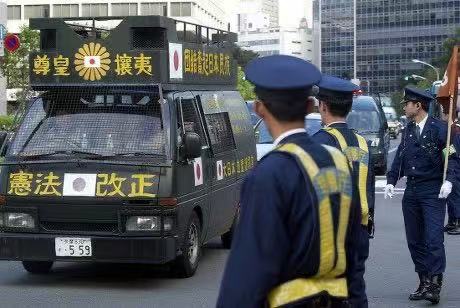
What is the benefit of a nation having a supreme ruler in name and reality? Consistency of action and responsibility makes action more rational than in the opposite case. Japan is not like this. Japanese history is basically a history of “Sonnō Jōi” (尊王攘夷, “Sonnō Jōi”): (1) politicians want to save the nation, achieve unification or regime change, can only use the Emperor’s name; (2) “barbarians” originally refers to Western powers, but can refer to all those who occupy actual supreme ruling position while limiting the Emperor from exercising supreme ruling power (and the “Shogun” (征夷大将军, “Seii-Taishogun”) and “bakufu” (幕府, “bakufu”) politics are originally extensions of Shinto political logic); (3) once successful, the new political group rises, establishes unprecedented military achievement, continues to nominally regard the Emperor as orthodox, on the surface making the Emperor the supreme ruler in name and reality; (4) but, anyone who realistically views politics knows, how can someone who did not personally establish military achievement have more power than someone who did? The basis of power is strength. The restored Emperor will only be the puppet of the person capable of restoring them. Even if the Emperor’s situation briefly improved, history also proves that loss of imperial power is the norm rather than the exception (even in China).
-
For a nation like China, when the supreme ruler is no longer in name and reality, politics also has problems, because the executors and bearers of action and responsibility are no longer consistent. The loss of imperial power inevitably triggers political struggle and even national turmoil. The final outcome will absolutely not be that the person who restored imperial power continues as the emperor’s subject, but will establish new legal legitimacy and achieve dynasty change (even if the Han had lasted nearly 400 years, Cao Wei still naturally inherited the mandate of heaven, not to mention Wang Mang “frictionlessly” replacing “Han” with “Xin,” largely because his virtue was generally recognized at the time). Why? Strength is a factual question; modesty does not change the situation of strength.
-
But for Japan it is not like this. After every successful “Sonnō Jōi” movement, the person who restored the Emperor continues as the Emperor’s subject. Thus, the supreme ruler continues to be divorced in name and reality: the Emperor nominally has supreme power, makes final decisions, and thus bears final responsibility, but in reality it is the opposite. The most famous “Sonnō Jōi” was of course the Meiji Emperor’s (幕末, “bakumatsu”) movement, ultimately achieving brief, substantive “restoration of imperial rule.” However, without carefully studying this history, casually flipping through a few pages of Chinese poetry and books also tells us that since the seizure of power was not personally achieved by Meiji, he inevitably would not obtain real power. The Emperor would inevitably be in an alliance of mutual use with the power holders. (Compared with China, where all-encompassing unification wars shattered all old dynasties’ wealth and power: every dynasty change was the loss of several percent of the population, at the end of Eastern Han, population dropped from 25 million to 8.6 million, early Tang years only 3 million households, early Kangxi years, Sichuan only had tens of thousands of people.) Even if forced by the national situation and popular will at the time, Meiji obtained certain real power, it would very quickly disappear in the next generation.
-
Hirohito was probably this kind of situation. At the time of whether to invade Northeast China, whether to invade Shanghai, whether to expand the war beyond Northeast, whether to go north to fight the Soviet Union or south to fight China, whether to negotiate or fight with Chiang Kai-shek, whether to prioritize attacking the continent or the ocean, whether to attack America, etc., Hirohito did not have final decision power (this does not mean he did not want power). Former Japanese Prime Minister Ishiba Shigeru also mentioned in conversations that at the time they conducted “total power” estimates, concluding that full-scale invasion of China was not feasible. But according to Ishiba, civilian officials lost control of the military, causing Japan to ultimately embark on a doomed external war. However, Ishiba, limited by his position and occasion, may or may not be willing to reveal deeper reasons: why did civilian officials lose control of the military (essentially, politicians cannot control the army)?
-
Japan’s this external war once again demonstrated the huge harm of Shinto politics: the Emperor is the nominal supreme ruler, everyone fights for the Emperor, but the Emperor himself cannot decide they should not fight for him; irresponsible politicians or military men, for their own achievements, disregard everything, placing the nation’s safety and people’s welfare behind them.
Japan’s Future
In the future, with the decline of American hegemony (I’m not saying America will continue declining indefinitely, no one believes any nation or organization can maintain prosperity forever, history has certain variables or cycles), the rise of Chinese power, Japan’s efforts to escape American control and return to being a “normal nation” will inevitably become a trend.
If America ultimately inevitably loses control, then before it loosens the chain holding the vicious dog, it will inevitably make the vicious dog fiercely bite its opponent one last time, for final use. This is of course a story for later.
The question now is, how do Japanese people themselves view their country’s future direction? I occasionally see words and actions from Japan’s far-right online. They hate China, deny defeat to China, and believe they should compete with China again. Strangely, their slogan is still “Sonnō Jōi”.
However, who is the “barbarian” in their hearts? Shouldn’t it be America rather than China?
The relationship between the Emperor and America is like the relationship between the Emperor and the “shogunate” (幕府, “bakufu”). “Anti-American” is “overthrow the shogunate.” No one is more familiar with this logic than Japanese. I predict Japan will inevitably turn anti-American at the appropriate time. But the question I’m more curious about is, in the new era’s “Sonnō Jōi” process, will Japan again repeat the mistake of external expansion?
I predict it will. First, to escape America, Japan will inevitably have a new political group rise, which will possess Japan’s strongest power and become the actual ruler. But, Japan’s characteristic problem lies in that every maximum scale, most fundamental national political mobilization is conducted in the name of “Sonnō Jōi” and according to Shinto political logic: first, not to establish new legal legitimacy after solving problems, but to attribute the root of national disaster to the Emperor being suppressed, because they must return great governance to the Emperor; second, once successful, the new political group cannot establish legal legitimacy but possesses final real power, very likely continuing external expansion to continue accumulating achievements.
Even if the political group’s head is unwilling, they may not be able to stop their subordinates’ impulse to continue establishing achievements (this is also one of the roots of Japan’s “gekokujō” (下克上, “gekokujō”) tradition - originally a Chinese concept that Japan adapted). Conversely, if the political group can establish legal legitimacy and become a supreme ruler matching in name and reality, they will be more capable of solving the difficult problem of the meritorious group (think of ancient Chinese history, what plagued founding emperors most was how to appease the meritorious group and deal with their endless demands for benefits - this is still a problem when new legal legitimacy can be established and the emperor can independently reward merits). For Japan, the Emperor, lacking strength, can only let the meritorious group continue attempting to establish military achievements, while truly powerful politicians are powerless to stop it. The result is predictable - this nation cannot move toward true “normalcy.”
So, I predict that after Japan successfully eliminates America this “barbarian,” it very likely will not stop, continuing down the old path of external expansion.
However, this should be the outcome America would most like to see after inevitably losing control, even an intentional or unintentional arrangement: preserve the Emperor system, tolerate Yasukuni Shrine. As long as the Emperor exists, “Sonnō Jōi” is the basic logic of Japanese politics. Yasukuni Shrine is the achievement savings bank of Shinto politics with the Emperor at its core, the dwelling place of war evil spirits.
America chose to seal rather than destroy this nation’s war evil spirits. Once the seal is lifted, war evil spirits will again control the nation, causing deep disaster to both other nations and its own people.
So, if someone asks me, after the next “Sonnō Jōi” movement, where should Japan’s future go? My answer is: completely abolish the Emperor system, reject Shinto politics.